

Author name: omkilkarihospital

Gynaecology

Preventive Health Checkup: Your Key to a Healthier Future

In today’s fast-paced world, most people focus on treating illnesses rather than preventing them. We often visit doctors only when something goes wrong, ignoring the fact that many diseases silently develop in the body without showing early symptoms. By the time these conditions are detected, they may already have reached an advanced stage, requiring extensive treatment and affecting quality of life. This is where preventive health checkups play a crucial role. A preventive health checkup is not just about detecting diseases but also about assessing overall health, identifying risk factors, and making lifestyle changes that promote long-term wellness. Regular screenings can save lives, reduce healthcare costs, and most importantly, provide peace of mind. In this comprehensive guide, we’ll explore why preventive health checkups are essential, the types of tests involved, benefits, ideal frequency, cost-effectiveness, and practical tips for leading a healthier future. What is a Preventive Health Checkup? A preventive health checkup is a series of medical tests and screenings performed periodically to evaluate your overall health and detect potential health problems at an early stage. Unlike diagnostic checkups (done when symptoms are already present), preventive checkups aim to catch diseases before they occur or worsen. Preventive checkups are designed to: In simple terms, preventive health checkups are an investment in your future health. Why Preventive Health Checkups Matter 1. Early Detection of Diseases Many health conditions like diabetes, hypertension, thyroid disorders, or certain cancers develop silently. By the time symptoms appear, they may have already caused significant damage. Preventive tests catch them early, ensuring timely treatment. 2. Reducing Healthcare Costs Treating advanced diseases is far more expensive than preventing them. A simple blood sugar test may cost a few hundred rupees, but untreated diabetes can lead to kidney failure, heart disease, or blindness—requiring lakhs of rupees for treatment. 3. Longer and Healthier Life People who undergo regular preventive checkups are more likely to live longer and healthier lives because they make informed lifestyle choices. 4. Stress-Free Living Knowing that your health is under control brings mental peace. Preventive checkups reduce anxiety about unknown illnesses. 5. Personalized Healthcare Every individual has unique health risks. Preventive checkups help doctors create personalized wellness plans tailored to your needs. Components of a Preventive Health Checkup A preventive health package typically includes: 1. Basic Tests 2. Advanced Screenings 3. Specialized Tests (Age & Gender Specific) 4. Lifestyle & Risk Assessment Age-Wise Preventive Health Checkup Guidelines For Young Adults (20–30 years) For Adults (30–40 years) For Middle-Aged Adults (40–50 years) For Seniors (50+ years) Preventive Health Checkups for Women Women face unique health challenges due to hormonal changes, pregnancy, and menopause. Regular checkups help in: Essential tests for women include: Preventive Health Checkups for Men Men are more prone to cardiovascular diseases, liver disorders (due to higher alcohol use), and prostate cancer. Key preventive tests include: Lifestyle Diseases and Preventive Checkups The rise of lifestyle diseases such as diabetes, obesity, cardiovascular problems, and mental stress highlights the importance of regular health screenings. Common lifestyle diseases detected early by checkups: Frequency of Preventive Health Checkups Myths vs. Facts about Preventive Health Checkups Cost-Effectiveness of Preventive Health Checkups Consider this comparison: Clearly, preventive health checkups save both money and lives. Role of Technology in Preventive Health Modern technology has transformed preventive healthcare: How to Prepare for a Preventive Health Checkup Steps to Build a Preventive Healthcare Routine Case Studies: Real-Life Impact of Preventive Checkups Case 1: Early Diabetes Detection A 32-year-old IT professional underwent a routine checkup and discovered high blood sugar. Early lifestyle changes prevented him from becoming diabetic. Case 2: Silent Heart Disease A 45-year-old woman with no symptoms found blockages in her heart during a preventive test. Angioplasty saved her from a possible heart attack. Case 3: Cancer Screening Saves Life A 50-year-old man diagnosed with prostate cancer at an early stage through PSA screening. Successful treatment ensured full recovery. Global Perspective on Preventive Healthcare Countries like the USA, UK, and Japan emphasize preventive health programs. India too is adopting this approach with government initiatives like: Future of Preventive Healthcare The future will focus more on predictive and preventive medicine with advancements in: Conclusion Preventive health checkups are not just a medical necessity but a lifestyle choice. They empower individuals to take control of their health, reduce long-term healthcare costs, and ensure a happier, healthier future. Your health is your greatest wealth—don’t wait for disease to strike before taking action. Invest in preventive health checkups today, and gift yourself and your family the promise of a healthier tomorrow.

Gynaecology

Rotablation Angioplasty: The Diamond-Tipped Solution for Hardened Heart Arteries

Introduction: Confronting the Challenge of Calcified Plaque In the world of interventional cardiology, the mission is clear: restore blood flow to the heart muscle by opening blocked coronary arteries. For decades, balloon angioplasty and stenting have been the gold standard, saving countless lives. But what happens when the enemy—the plaque clogging the artery—isn’t just soft and fatty, but hard as rock? This is the challenge of severely calcified coronary artery disease. Imagine trying to push a scaffold (a stent) through a concrete pipe. A standard balloon might not even inflate properly, and if it does, the stent may not deploy symmetrically or fully expand. This increases the risk of complications both during and after the procedure, including stent failure and re-narrowing of the artery. To tackle this formidable adversary, cardiologists have a specialized tool in their arsenal: Rotational Atherectomy, more commonly known as Rotablation. This procedure represents a fascinating convergence of precision engineering and medical expertise. It’s not a first-line treatment, but for the right patient with the right kind of blockage, it can be the key to a successful and lasting outcome. This comprehensive guide will delve into everything you need to know about Rotablation Angioplasty: how it works, its profound benefits, the conditions it treats, and what to expect during recovery. Part 1: Understanding the Fundamentals – What is Rotablation Angioplasty? The Core Concept: Differential Cutting At its heart, Rotablation is a minimally invasive procedure used to treat heavily calcified coronary arteries. The principle behind its success is called “differential cutting.” This means the device is designed to selectively ablate (remove) hard, calcified plaque while being relatively harmless to healthy, soft, elastic tissue. How is this possible? The technology leverages a simple fact: healthy tissue is flexible and can “dodge” the tool, while calcified plaque is rigid and cannot. The Star of the Show: The Rotablator™ System The procedure gets its name from the device used: the Rotablator™. This sophisticated system consists of a console (the control unit) and a catheter-based tool tipped with a tiny, olive-shaped burr. This burr is no ordinary drill bit; it is coated in microscopic diamond crystals, making it one of the hardest substances on earth, perfect for grinding through calcium. The burr is spun at extremely high speeds—between 140,000 to 200,000 revolutions per minute (RPM)—by a compressed air turbine. It is advanced over a specially designed guidewire (the “RotaWire”) that acts like a track, ensuring the burr stays centered and only grinds the plaque, not the healthy artery wall. As the diamond-tipped burr rotates at these incredible speeds, it pulverizes the calcified plaque into millions of microscopic particles (smaller than red blood cells). These particles are then safely carried away by the bloodstream and ultimately filtered out by the liver, spleen, and kidneys. It’s crucial to understand that Rotablation is not a standalone treatment. Its primary purpose is to modify or prepare the artery. By breaking up the concrete-like calcium, it creates a smooth channel, allowing the subsequent balloon to inflate fully and the stent to be deployed optimally and symmetrically. In essence: Rotablation paves the way for a successful stent placement where standard techniques might fail. Part 2: The Rotablation Procedure: A Step-by-Step Walkthrough Understanding the process can alleviate much of the anxiety surrounding a cardiac procedure. Here’s what typically happens from start to finish. Step 1: Pre-Procedure PreparationThe process begins like any other cardiac catheterization. You will be given a mild sedative to help you relax, but you will remain awake. The area of access—usually the wrist (radial artery) or the groin (femoral artery)—is cleaned and numbed with local anesthetic. Step 2: Gaining Access and Diagnostic AngiogramThe cardiologist inserts a small sheath into the artery. Through this sheath, a catheter (a thin, flexible tube) is threaded all the way up to the heart’s arteries under X-ray guidance (fluoroscopy). A contrast dye is injected to make the arteries visible on the X-ray screen, providing a clear map of the blockages and their calcification. Step 3: Delivering the RotaWireOnce the problematic lesion is identified, the cardiologist will carefully navigate the specialized, stainless-steel RotaWire across the calcified blockage. This wire is the foundation for the entire procedure; the burr will travel over it. Step 4: The “Rota” Run – Advancing the BurrThe diamond-tipped burr is selected based on the size of the artery (usually 1.25mm to 2.5mm in diameter). It is attached to its drive shaft and advanced over the RotaWire until it reaches the beginning of the lesion. The console is activated, and the burr begins to spin. The cardiologist gently and expertly “pecks” or “dabs” the burr against the calcified segment, advancing it slowly for short periods (typically 15-30 seconds at a time). This intermittent technique prevents overheating and ensures adequate blood flow between runs. You might hear a faint, high-pitched “whirring” sound from the drive shaft during these runs. Step 5: Post-Rotablation Angioplasty and StentingAfter the Rotablator has successfully modified the plaque and created a smoother channel, it is removed. The job is only half done. Now, a standard balloon catheter is advanced and inflated to further widen the artery. Finally, a drug-eluting stent (a mesh scaffold that releases medication to prevent re-blockage) is placed in the newly opened section of the artery and expanded. Step 6: Completion and RemovalA final angiogram is performed to confirm the artery is widely open, blood flow is restored (known as TIMI 3 flow), and the stent is well-apposed to the vessel wall. All catheters and the sheath are removed, and pressure is applied to the access site to prevent bleeding. The entire procedure can take anywhere from one to three hours, depending on the complexity of the blockages. Part 3: The Critical Benefits and Advantages of Rotablation Why go through this more complex procedure? The benefits in complex cases are significant and often make the difference between success and failure. Part 4: Who is a Candidate? Indications and Treatments Rotablation is a highly specialized tool, not for every blockage. Patient selection is paramount. The Primary Indication: Severe Coronary Artery CalcificationThe ideal candidate is

Uncategorized

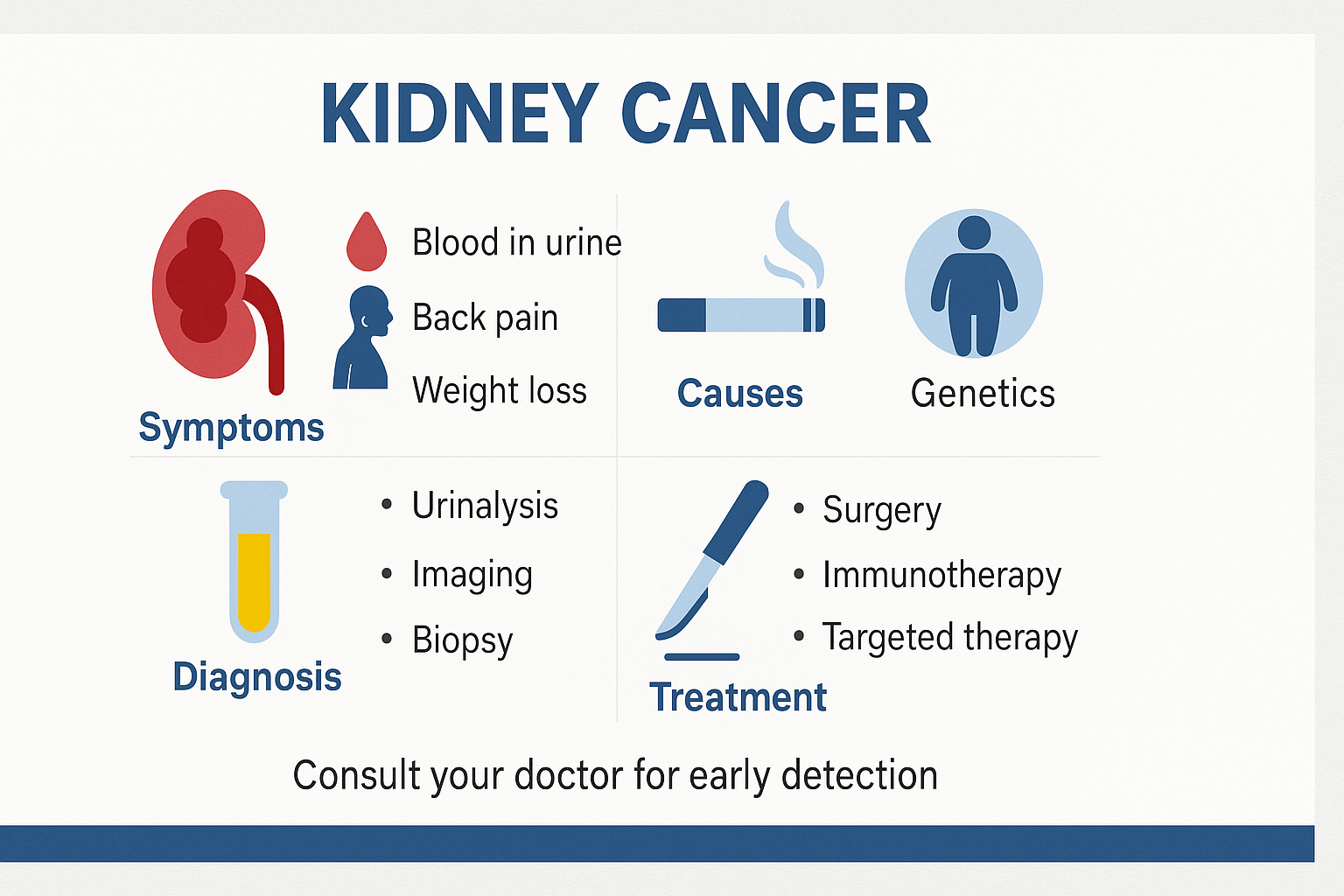
Kidney Cancer: Symptoms, Causes, Diagnosis and Treatment

Kidney Cancer: Symptoms, Causes, Diagnosis and Treatment Kidney cancer is a serious condition that affects thousands of people worldwide. Early detection and treatment can significantly improve outcomes. In this blog, we’ll explore the symptoms, causes, diagnosis, and treatment options for kidney cancer while optimizing for SEO to ensure you get the most reliable information. What is Kidney Cancer? Kidney cancer, also known as renal cancer, occurs when abnormal cells grow uncontrollably in the kidneys. The most common type is renal cell carcinoma (RCC), accounting for about 90% of cases. Symptoms of Kidney Cancer Early-stage kidney cancer often shows no symptoms, but as it progresses, the following signs may appear: Symptom Description Blood in urine (hematuria) Pink, red, or cola-colored urine Persistent back or side pain Pain below the ribs that doesn’t go away Unexplained weight loss Sudden weight loss without diet or exercise changes Fatigue Extreme tiredness that doesn’t improve with rest Fever Recurrent fevers not caused by infection Swelling in legs/ankles Fluid buildup due to kidney dysfunction Causes and Risk Factors of Kidney Cancer The exact cause is unknown, but several risk factors increase the likelihood of developing kidney cancer: ✅ Smoking – Doubles the risk of kidney cancer✅ Obesity – High BMI increases hormonal changes that may trigger cancer✅ High blood pressure (Hypertension) – Linked to kidney damage✅ Family history – Genetic predisposition (e.g., von Hippel-Lindau disease)✅ Exposure to toxins – Asbestos, cadmium, and certain chemicals✅ Chronic kidney disease – Long-term dialysis patients are at higher risk Diagnosis of Kidney Cancer If kidney cancer is suspected, doctors may recommend the following tests: Diagnostic Test Purpose Urinalysis Checks for blood or abnormal cells in urine Blood tests Evaluates kidney function and overall health Imaging tests (CT, MRI, Ultrasound) Detects tumors and checks their size/spread Biopsy Removes a small tissue sample for lab testing IV Pyelogram X-ray with contrast dye to examine kidneys Treatment Options for Kidney Cancer Treatment depends on the stage, size, and spread of the cancer. Common options include: Treatment Description Surgery (Nephrectomy) Partial or complete kidney removal Radiation Therapy Uses high-energy rays to kill cancer cells Immunotherapy Boosts the immune system to fight cancer Targeted Therapy Drugs that attack specific cancer cell mutations Cryoablation Freezes cancer cells with extreme cold Active Surveillance Monitoring small, slow-growing tumors Prevention Tips ✔ Quit smoking – Reduces cancer risk significantly✔ Maintain a healthy weight – Lowers obesity-related risks✔ Control blood pressure – Prevents kidney damage✔ Stay hydrated – Helps flush out toxins✔ Limit exposure to harmful chemicals – Wear protective gear if needed Conclusion Kidney cancer can be life-threatening if not detected early. Knowing the symptoms, causes, and treatment options can help in timely intervention. If you experience any warning signs, consult a doctor immediately.

Gynaecology

Menstrual Cycle: Overview and Phases

Introduction: More Than Just Your Period For too long, the menstrual cycle has been shrouded in mystery, stigma, and often, dismissed as simply “that time of the month.” But what if we told you that your cycle is not a curse, but a incredible, intricate biological symphony? A vital sign, much like your blood pressure or heart rate, that offers profound insights into your overall health, energy, and creativity. Understanding your menstrual cycle is about reclaiming your body’s narrative. It’s about moving from feeling at the mercy of your hormones to working with them. By learning the language of your cycle, you can optimize your diet, exercise, work schedule, and relationships, transforming your life from a constant struggle into a rhythmic dance. This ultimate guide will take you on a deep dive into the four phases of your menstrual cycle. We’ll demystify the hormones at play, explain how to track your cycle effectively, and provide practical tips for harnessing the unique power of each phase. Consider this your masterclass in cycle literacy. What Exactly is the Menstrual Cycle? The Basics The menstrual cycle is a recurring process, typically around 28 days, though anywhere from 21 to 35 days is considered normal. It is orchestrated by a complex communication network between your brain and your ovaries, using hormones as chemical messengers. The primary purpose of this entire process is reproduction—to prepare your body for a potential pregnancy each month. The cycle involves the development and release of an egg (ovulation), the preparation of the uterine lining to nourish that egg, and the shedding of that lining (your period) if pregnancy does not occur. It’s crucial to understand that the cycle is not just the week of your period. Your period is merely the beginning—Day 1 of a whole new cycle. The Four Key Phases of the Menstrual Cycle The menstrual cycle can be broken down into four distinct phases, each characterized by specific hormonal shifts and physical changes. Let’s explore each phase in detail. Phase 1: The Menstrual Phase (Days 1-5 approx.) The menstrual phase marks the official start of your cycle. It begins on the first day of noticeable bleeding. Phase 2: The Follicular Phase (Days 1-13 approx.) The follicular phase actually overlaps with the menstrual phase! It starts on Day 1 of your period and ends with ovulation. While you are menstruating (Days 1-5), your body is already preparing for the next potential pregnancy. Phase 3: The Ovulatory Phase (Day 14 approx.) Ovulation is the main event of the menstrual cycle—the release of a mature egg from the dominant follicle in the ovary. The egg then travels down the fallopian tube, where it can live for about 12-24 hours, awaiting fertilization. Phase 4: The Luteal Phase (Days 15-28 approx.) After the egg is released, the ruptured follicle transforms into a structure called the corpus luteum. This phase is named after it. Understanding Your Hormonal Power Players The symphony of your cycle is conducted by four key hormones: How to Track Your Cycle: A Practical Guide Tracking your cycle is the first step to understanding it. Ditch the guesswork and become a detective of your own body. Cycle Syncing: Aligning Your Life with Your Phases “Cycle syncing,” a term popularized by Alisa Vitti, is the practice of adapting your diet, exercise, work, and social life to the changing hormonal needs of each phase. When to See a Doctor: Recognizing Irregularities While some variation is normal, certain symptoms warrant a conversation with a healthcare provider: These could be signs of underlying conditions like PCOS, endometriosis, fibroids, or thyroid disorders. Conclusion: Embrace Your Cycle’s Wisdom Your menstrual cycle is not a linear experience of “good” and “bad” weeks. It is a continuous, cyclical journey of renewal, growth, release, and transformation. Each phase offers a unique set of superpowers. By tuning in, tracking your patterns, and learning to sync your life with your cycle’s natural rhythm, you can stop fighting your body and start thriving with it. You can move from feeling like a victim of your hormones to becoming the empowered conductor of your hormonal symphony. This knowledge is a lifelong tool for health, self-compassion, and unparalleled productivity. Start paying attention. Your cycle has been speaking to you all along. It’s time to listen. FAQ Section Q: How long is a “normal” menstrual cycle?A: A normal cycle can range from 21 to 35 days. The average is around 28 days. What’s most important is what’s regular for you. Q: Can I get pregnant during my period?A: While less likely, it is possible. Sperm can live inside the female reproductive tract for up to 5 days. If you have a short cycle and ovulate early, having sex near the end of your period could lead to pregnancy. Q: Why do I crave carbs and chocolate before my period?A: In the luteal phase, your metabolic rate increases, and serotonin (a mood-regulating neurotransmitter) levels can dip. Your body craves carbs to try and boost serotonin production. Magnesium levels also drop, which some experts believe may trigger chocolate cravings (chocolate is high in magnesium). Q: What is the difference between PMS and PMDD?A: PMS involves physical and emotional symptoms that can be uncomfortable but manageable. PMDD (Premenstrual Dysphoric Disorder) is a more severe form that causes extreme mood shifts, depression, anger, and anxiety that can significantly disrupt daily life and relationships. Q: Does being on hormonal birth control change this cycle?A: Yes. Combination birth control (the pill, patch, ring) prevents ovulation. The “period” you have on these methods is not a true menstrual period but a withdrawal bleed caused by the drop in hormones during the placebo week. Progesterone-only methods can also suppress ovulation and change bleeding patterns. You still experience hormonal fluctuations on birth control, but they are dictated by the external hormones, not your natural internal rhythm.

Uncategorized

Prenatal Care Checklist: What Every Mother Should Know

That positive pregnancy test is the first step on one of life’s most incredible journeys. Amid the excitement (and maybe a little nervousness), you’re probably wondering, “What do I need to do now to ensure a healthy pregnancy?” Prenatal care isn’t just a series of doctor’s appointments; it’s a holistic approach to nurturing yourself and your growing baby. It’s about making informed choices, understanding the changes in your body, and building a support system. This ultimate prenatal care checklist is your month-by-month companion. We’ll break down everything you need to know—from crucial medical check-ups and nutritional must-haves to fitness tips and mental wellness strategies. Consider this your go-to guide for navigating the next nine months with confidence and knowledge. Why Prenatal Care is Non-Negotiable: The Stats Don’t Lie Let’s start with the most important question: why is prenatal care so critical? The data is overwhelmingly clear: Think of your prenatal team as your personal guides. They’re there to ensure both you and your baby have the best possible start. First Trimester (Weeks 1-13): The Foundation of Life The first trimester is a period of rapid development for your baby and significant adjustment for you. Early symptoms like fatigue, nausea, and breast tenderness are common as your body ramps up hormone production. Your First Trimester Prenatal Checklist: Medical Appointments & Tests Nutrition & Hydration Lifestyle & Wellness Second Trimester (Weeks 14-27): The “Honeymoon” Phase For many, the second trimester brings renewed energy. Nausea often subsides, and you’ll start to look pregnant! This is a wonderful time to focus on preparation and enjoy your growing bump. Your Second Trimester Prenatal Checklist: Medical Appointments & Tests Nutrition & Hydration Lifestyle & Wellness Third Trimester (Weeks 28-40+): The Final Countdown You’re in the home stretch! As your baby gains weight rapidly, you might experience new discomforts like back pain, heartburn, and shortness of breath. The focus now shifts to final preparations and monitoring for delivery. Your Third Trimester Prenatal Checklist: Medical Appointments & Tests Nutrition & Hydration Lifestyle & Wellness Beyond the Doctor’s Office: Holistic Prenatal Wellness Prenatal care is more than just medicine. Taking care of your whole self is essential. When to Call Your Doctor: Red Flags Never hesitate to contact your healthcare provider if you experience: Conclusion: You’ve Got This! This prenatal care checklist is your roadmap, but remember, every pregnancy is unique. Your best resource is always your healthcare team. Ask questions, advocate for yourself, and trust your instincts.

Uncategorized

Delayed Periods: Causes, Symptoms & Diagnosis

That feeling of anticipation, followed by a trickle of worry—a delayed period is an experience nearly every woman or person assigned female at birth will encounter at some point. While a missed period is often the first clue to a potential pregnancy, it’s far from the only reason your cycle might decide to take an unscheduled vacation. A delayed period, typically defined as being 5 or more days late based on your regular cycle, is a common gynecological concern. But what exactly is “normal,” and when should you start looking for answers? This comprehensive guide is designed to be your trusted resource. We will demystify the menstrual cycle, explore the vast array of causes for a delayed period—from the most common to the more complex—and walk you through the diagnostic process. Our goal is to empower you with knowledge, ease your anxiety, and help you understand when it’s time to consult a healthcare professional. Understanding the Menstrual Cycle: What “Regular” Really Means Before we can understand a delay, we need to understand what constitutes a typical cycle. It’s a complex, beautifully orchestrated dance of hormones between your brain and your ovaries. The Four Phases of Your Cycle: What is a “Normal” Cycle? The textbook definition of a normal menstrual cycle is every 21 to 35 days, with bleeding lasting 2 to 7 days. However, “normal” is what’s normal for you. Some women have clockwork 28-day cycles, while others have consistent 32-day cycles. Variability of a few days is common. A period is generally considered delayed if it’s: Top Causes of a Delayed Period: Beyond Pregnancy While pregnancy is the first thing many people think of, the list of potential causes is long and varied. They can be broadly categorized into lifestyle factors, hormonal imbalances, medical conditions, and medications. 1. Pregnancy and Lactation 2. Lifestyle and External Factors Your menstrual cycle is highly sensitive to changes in your daily habits and environment. 3. Hormonal Imbalances and Medical Conditions Many underlying health issues manifest through menstrual irregularities. 4. Medications and Contraceptives Certain drugs can have side effects that include delayed periods. 5. Perimenopause and Menopause 6. Other Causes Symptoms Associated with Delayed Periods A delayed period itself is a symptom. However, it’s often accompanied by other signs that can provide clues to the underlying cause. When to See a Doctor: Red Flags and Guidance It’s always wise to listen to your body. While a single late period often isn’t a cause for alarm, certain situations warrant a visit to your gynecologist or healthcare provider. Seek medical advice if: The Diagnosis: How Doctors Find the Cause Diagnosing the reason for a delayed period is a detective game. Your doctor will use a combination of your history, a physical exam, and targeted tests to pinpoint the cause. 1. Medical History and Symptom Review Your doctor will ask detailed questions, such as: 2. Physical Examination This will likely include: 3. Diagnostic Tests Based on the initial findings, your doctor may order one or more of the following tests: The process of diagnosis is about elimination. Your doctor will start with the most common causes and work through the list until they find the answer. Treatment and Management: Addressing the Root Cause There is no one-size-fits-all treatment for a delayed period. The approach is entirely dependent on the underlying cause. Conclusion: Listen to Your Body’s Signals A delayed period can be a source of anxiety, but it’s important to remember that it’s a common occurrence with a wide range of potential causes, most of which are manageable. While it’s easy to jump to conclusions, the best course of action is to methodically consider the possibilities, starting with the most common lifestyle factors. Your menstrual cycle is a powerful barometer of your overall health. A delayed period is your body’s way of signaling that something is out of balance. It might be something simple like a stressful month at work, or it could be an opportunity to identify and address a deeper health issue. Always consult a healthcare professional for a proper diagnosis and personalized treatment plan. Don’t hesitate to be your own advocate—track your cycles, note your symptoms, and share your concerns openly with your doctor. Understanding your body is the first step toward taking control of your health and well-being. FAQ: Frequently Asked Questions About Delayed Periods Q1: How late can a period be without being pregnant?A: A period can be late by a week or even a few months, depending on the cause. Stress, illness, significant weight change, and PCOS are common non-pregnancy reasons for a lengthy delay. Q2: Can I force my period to come?A: There’s no safe, reliable natural method to “induce” a period. Some anecdotal remedies like vitamin C, parsley tea, or ginger exist, but they lack scientific evidence. The only medically proven way to induce a period is with prescription progesterone. If your period is late, it’s best to identify the cause rather than force it. Q3: How long after stopping birth control should my period return?A: It can vary. For some women, periods return within 4-6 weeks. For others, especially after long-term use of injectable or implantable contraceptives, it can take several months (sometimes up to a year) for a regular cycle to resume. Q4: I have a negative pregnancy test but no period. What’s wrong?A: This is a very common scenario. It almost certainly means you are not pregnant, but ovulation was delayed or didn’t occur this cycle. This can happen due to all the reasons listed above: stress, weight changes, illness, PCOS, etc. If it persists for more than three cycles, see a doctor. Q5: Can the COVID-19 vaccine or virus affect my period?A: Yes, temporary menstrual changes, including delayed or heavier periods, have been widely reported after both COVID-19 infection and vaccination. This is believed to be a temporary immune system response that briefly affects the hormone axis or the uterine lining. Cycles typically return to normal within one or two cycles.

Gynaecology

How to choose the Best Plastic Surgeons in Varanasi?

Embarking on the journey of plastic surgery is a significant decision, one that intertwines personal aspirations with medical precision. Whether you seek reconstructive surgery after an accident, a cosmetic enhancement, or a procedure to restore confidence, the choice of your surgeon and their facility is paramount. Varanasi, a city steeped in tradition, is also home to modern medical advancements, making the selection process both promising and critical. This guide is designed to equip you with a practical, step-by-step framework to navigate this important choice, ensuring your journey is safe, informed, and leads to the best possible outcome. The Pillars of Selection: A Step-by-Step Evaluation 1. Board Certification and Credentials: The Non-Negotiable FoundationThis is the first and most crucial filter. Do not compromise here. 2. Specialization and Proven Experience: Beyond General PracticePlastic surgery is a vast field. You need a specialist for your specific need. 3. The Hospital’s Infrastructure: The Ecosystem of SafetyThe surgeon’s skill is vital, but the environment in which they operate is equally important. 4. The Consultation: Your Opportunity to EvaluateThe consultation is not just for the surgeon to assess you; it is for you to assess them. 5. Reviews and Testimonials: Learning from Others’ Experiences 6. Cost: An Investment, Not an Expense Om Kilkari Hospital: A Recognized Name in Varanasi’s Healthcare Landscape When applying the above criteria, Om Kilkari Hospital is a recognized and established name for surgical care in Varanasi, including plastic surgery procedures. Here’s how it aligns with the key selection pillars:

Gynaecology

What Do You Need to Know About Shoulder Arthroscopy?

Introduction – Understanding Shoulder Arthroscopy Shoulder pain can be caused by injury, overuse, degenerative conditions, or structural issues. When conservative treatments like medication, physiotherapy, or injections fail, shoulder arthroscopy can offer both a diagnosis and a solution with minimal disruption. At OM Kilkari Hospital, our orthopedic surgeons perform shoulder arthroscopy using state-of-the-art equipment, ensuring accurate treatment and faster recovery for our patients in Varanasi and surrounding areas. 2. Anatomy of the Shoulder Joint The shoulder is one of the most complex joints in the body, capable of an extensive range of motion. It consists of: 3. What is Shoulder Arthroscopy? Shoulder arthroscopy is a minimally invasive surgical technique that uses a small camera called an arthroscope, inserted through tiny incisions, to view, diagnose, and treat problems inside the shoulder joint. The camera transmits images to a monitor, allowing the surgeon to perform precise repairs with minimal tissue damage. 4. Conditions Treated with Shoulder Arthroscopy At OM Kilkari Hospital, we use shoulder arthroscopy to manage: 5. Who is an Ideal Candidate? You may be advised to undergo shoulder arthroscopy if: 6. Preparing for Shoulder Arthroscopy Our orthopedic team ensures a smooth preparation process: 7. Step-by-Step Procedure Explained Average surgery time: 30–90 minutes, depending on the complexity. 8. Recovery Timeline – What to Expect At OM Kilkari Hospital, our physiotherapy unit works closely with orthopedic surgeons to personalize recovery plans. 9. Benefits of Shoulder Arthroscopy 10. Risks and Possible Complications Though rare, risks include: We minimize these risks through strict sterile protocols and advanced surgical techniques. 11. Rehabilitation and Physical Therapy Rehabilitation is key to successful recovery. Our physiotherapy program includes: 12. Life After Shoulder Arthroscopy – Long-Term Outlook Most patients return to their normal activities without pain. Athletes can often resume sports within 4–6 months, provided they follow their rehabilitation plan diligently. 13. FAQs About Shoulder Arthroscopy Q1: Is shoulder arthroscopy painful?A: Pain is usually minimal and controlled with medication. Q2: How soon can I return to work?A: Desk jobs may resume in 1–2 weeks; heavy labor may take 3–4 months. Q3: Will I need another surgery in the future?A: Most patients do not, but this depends on the underlying condition and lifestyle. 14. Conclusion & OM Kilkari Hospital’s Expertise At OM Kilkari Hospital, our orthopedic specialists have extensive experience performing shoulder arthroscopy with excellent patient outcomes. From diagnosis to rehabilitation, we provide comprehensive, patient-centered care tailored to your condition.

Uncategorized

Knee Pain After Replacement: Causes and When to Seek Help

At OM Kilkari Hospital, we understand that knee replacement is a big decision—one that can restore mobility, independence, and quality of life. However, it’s natural to have concerns, especially if pain lingers after surgery. While mild discomfort is part of the healing process, persistent or severe pain after a knee replacement should never be ignored. It could be a sign of infection, implant issues, or other treatable conditions. Our orthopedic experts are here to help you understand why knee pain may occur after replacement, how we diagnose it, and the advanced treatment options we offer in Varanasi for faster, safer recovery. 2. What is Knee Replacement Surgery? Purpose & Benefits Knee replacement (knee arthroplasty) is a surgical procedure where damaged joint surfaces are replaced with artificial components. It’s performed to: At OM Kilkari Hospital, our orthopedic surgeons use minimally invasive techniques, precision alignment systems, and infection control protocols to ensure the best outcomes. Types of Knee Replacement 3. Recovery Timeline – What’s Normal & What’s Not After surgery at OM Kilkari Hospital, we provide personalized rehabilitation programs to speed up healing. Here’s a general recovery outline: If pain persists beyond this period or worsens, further evaluation is essential. 4. Common Causes of Knee Pain After Replacement 1. Normal Post-Surgical Healing 2. Infection 3. Implant Loosening 4. Stiffness (Arthrofibrosis) 5. Nerve-Related Pain 6. Referred Pain 5. When to Seek Immediate Medical Attention You should contact OM Kilkari Hospital right away if you experience: 6. How OM Kilkari Hospital Diagnoses Post-Replacement Knee Pain Our orthopedic evaluation includes: 7. Advanced Treatment Options Available at OM Kilkari Hospital We offer: 8. Preventing Knee Pain After Surgery – Our Expert Tips 9. Patient Success Stories from OM Kilkari Hospital We have helped hundreds of patients in Varanasi and surrounding regions regain mobility after knee replacement. For example:Mrs. Sharma, 62, came to us with severe post-replacement pain from another hospital. After proper diagnosis, we treated a hidden infection, and within 3 months, she resumed her daily walks pain-free. 10. Frequently Asked Questions (FAQs) Q1: Is knee pain normal a year after replacement?A: Occasional mild discomfort can happen, but persistent pain needs evaluation. Q2: Can my implant wear out?A: Yes, most last 15–20 years; revision may be needed if worn. Q3: How can OM Kilkari Hospital help with failed knee replacements?A: We specialize in complex revision surgeries with high success rates. 11. Conclusion & Call-to-Action Knee pain after replacement is not always a cause for alarm—but it should never be ignored. At OM Kilkari Hospital, we combine advanced technology, skilled surgeons, and compassionate care to ensure your new knee supports a pain-free, active life.

Gynaecology

Dystonia: Types, Causes, Symptoms, and Treatment

Introduction Dystonia is a complex neurological movement disorder characterized by involuntary muscle contractions, leading to repetitive or twisting movements and abnormal postures. It can affect a single muscle, a group of muscles, or the entire body, significantly impacting a person’s quality of life. In this comprehensive guide, we will explore: By the end of this article, you will have a thorough understanding of dystonia, its management, and the latest advancements in treatment. What is Dystonia? Dystonia is a movement disorder where the brain sends incorrect signals to muscles, causing them to contract involuntarily. These contractions can be painful and may lead to abnormal postures or repetitive movements. Key Facts About Dystonia Types of Dystonia Dystonia is classified based on affected body parts and underlying causes. 1. Focal Dystonia (Affects One Body Part) 2. Segmental Dystonia (Affects Adjacent Body Parts) 3. Generalized Dystonia (Whole Body Affected) 4. Paroxysmal Dystonia (Episodic Spasms) 5. Task-Specific Dystonia Causes and Risk Factors Dystonia can result from genetic mutations, brain injuries, or other medical conditions. Primary Dystonia (Genetic Causes) Secondary Dystonia (Acquired Causes) Risk Factors Symptoms of Dystonia Symptoms vary depending on the type but commonly include: When to See a Doctor Diagnosis of Dystonia Diagnosing dystonia involves: Treatment Options for Dystonia While there’s no cure, treatments help manage symptoms and improve quality of life. 1. Medications 2. Physical & Occupational Therapy 3. Deep Brain Stimulation (DBS) 4. Alternative Therapies Living with Dystonia Managing dystonia involves: Conclusion Dystonia is a challenging but manageable condition. Early diagnosis and a tailored treatment plan can significantly improve symptoms and quality of life. If you or a loved one experiences unexplained muscle spasms, consult a neurologist for proper evaluation.

Scroll to Top
Call Now