
Introduction: More Than Just Your Period
For too long, the menstrual cycle has been shrouded in mystery, stigma, and often, dismissed as simply “that time of the month.” But what if we told you that your cycle is not a curse, but a incredible, intricate biological symphony? A vital sign, much like your blood pressure or heart rate, that offers profound insights into your overall health, energy, and creativity.
Understanding your menstrual cycle is about reclaiming your body’s narrative. It’s about moving from feeling at the mercy of your hormones to working with them. By learning the language of your cycle, you can optimize your diet, exercise, work schedule, and relationships, transforming your life from a constant struggle into a rhythmic dance.
This ultimate guide will take you on a deep dive into the four phases of your menstrual cycle. We’ll demystify the hormones at play, explain how to track your cycle effectively, and provide practical tips for harnessing the unique power of each phase. Consider this your masterclass in cycle literacy.
What Exactly is the Menstrual Cycle? The Basics
The menstrual cycle is a recurring process, typically around 28 days, though anywhere from 21 to 35 days is considered normal. It is orchestrated by a complex communication network between your brain and your ovaries, using hormones as chemical messengers.
The primary purpose of this entire process is reproduction—to prepare your body for a potential pregnancy each month. The cycle involves the development and release of an egg (ovulation), the preparation of the uterine lining to nourish that egg, and the shedding of that lining (your period) if pregnancy does not occur.
It’s crucial to understand that the cycle is not just the week of your period. Your period is merely the beginning—Day 1 of a whole new cycle.
The Four Key Phases of the Menstrual Cycle
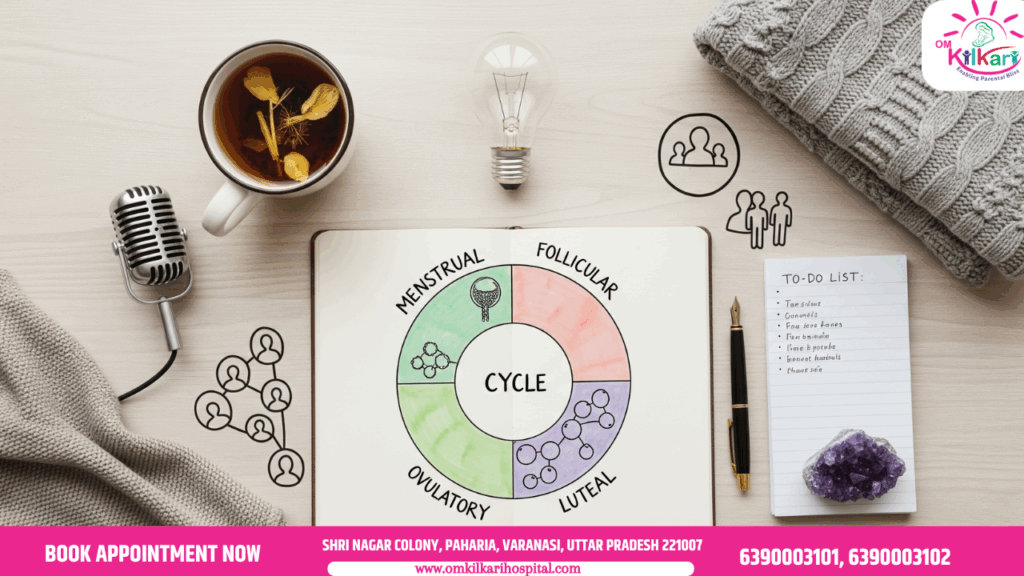
The menstrual cycle can be broken down into four distinct phases, each characterized by specific hormonal shifts and physical changes.
- Menstrual Phase (Your Period)
- Follicular Phase (Pre-Ovulation)
- Ovulatory Phase (The Main Event)
- Luteal Phase (Post-Ovulation)
Let’s explore each phase in detail.
Phase 1: The Menstrual Phase (Days 1-5 approx.)
The menstrual phase marks the official start of your cycle. It begins on the first day of noticeable bleeding.
- What’s Happening Biologically? Since the egg from the previous cycle was not fertilized, levels of the hormones estrogen and progesterone drop sharply. This dramatic decrease signals the uterus that it does not need to maintain the thick, nutrient-rich lining it built in the previous cycle. The lining, called the endometrium, breaks down and is shed through the vagina. This shedding is what we know as menstrual blood.
- Key Hormones: Estrogen and progesterone are at their lowest point.
- Physical & Emotional Experience:
- Physical: Cramping (caused by prostaglandins, chemicals that make the uterus contract to expel its lining), bloating, breast tenderness, fatigue, lower back pain, and headaches are common.
- Emotional: This is often a time of introspection, withdrawal, and a desire to rest. You may feel less social and more inward-focused. It’s a natural time for release, both physically and emotionally.
- How to Support Your Body:
- Nutrition: Focus on iron-rich foods (leafy greens, red meat, lentils) to replenish what’s lost through bleeding. Magnesium (found in nuts, seeds, dark chocolate) can help ease cramps. Stay hydrated and avoid inflammatory foods like excess sugar and processed carbs.
- Exercise: Gentle movement is king. Think walking, yoga, stretching, or light Pilates. Listen to your body—if you need a complete rest day, take it.
- Lifestyle: Honor your need for solitude and rest. This is a fantastic time for journaling, reviewing the past month, and setting intentions for the new cycle ahead. Prioritize sleep.
Phase 2: The Follicular Phase (Days 1-13 approx.)
The follicular phase actually overlaps with the menstrual phase! It starts on Day 1 of your period and ends with ovulation. While you are menstruating (Days 1-5), your body is already preparing for the next potential pregnancy.
- What’s Happening Biologically? At the beginning of this phase, your pituitary gland (in your brain) releases Follicle-Stimulating Hormone (FSH). FSH stimulates your ovaries to produce around 5-20 tiny sacs called follicles. Each follicle contains an immature egg. Eventually, one (or sometimes two) dominant follicle will outpace the others and continue to mature. The developing follicles release estrogen, which has a critical job: to rebuild the endometrial lining that was just shed. This lining becomes thick and spongy again, preparing a nourishing environment for a potential fertilized egg.
- Key Hormones: FSH rises initially, followed by a steady and significant rise in estrogen.
- Physical & Emotional Experience:
- Physical: As your period ends, your energy begins to rise. You’ll likely feel lighter and more energetic. Cervical fluid changes from non-existent or sticky to a creamy, white consistency.
- Emotional: This is a springtime for the soul! With rising estrogen, your brain is buzzing with ideas, creativity, and a renewed sense of possibility. You may feel more optimistic, social, and motivated to start new projects.
- How to Support Your Body:
- Nutrition: Support estrogen metabolism with cruciferous vegetables (broccoli, cauliflower, kale) and fiber. Continue eating whole, energizing foods.
- Exercise: This is the time to go hard! Your energy and stamina are increasing. Take advantage of this by scheduling high-intensity interval training (HIIT), strength training, running, or competitive sports.
- Lifestyle: Channel your creative and mental energy. Brainstorm, start new projects, schedule important meetings, and be social. It’s a powerful time for learning and exploration.
Phase 3: The Ovulatory Phase (Day 14 approx.)
Ovulation is the main event of the menstrual cycle—the release of a mature egg from the dominant follicle in the ovary. The egg then travels down the fallopian tube, where it can live for about 12-24 hours, awaiting fertilization.
- What’s Happening Biologically? Estrogen levels peak, triggering a massive surge of Luteinizing Hormone (LH) from the pituitary gland. This LH surge is what causes the mature follicle to rupture and release its egg. This is ovulation.
- Key Hormones: Estrogen peaks, triggering a massive surge of Luteinizing Hormone (LH).
- Physical & Emotional Experience:
- Physical: You may feel a slight twinge or pain on one side of your lower abdomen (known as mittelschmerz, German for “middle pain”). Your body temperature may have a slight basal shift. The most noticeable sign is a change in cervical fluid—it becomes clear, slippery, and stretchy, much like raw egg whites. This is designed to help sperm swim toward the egg. Libido is often at its peak.
- Emotional: This is your confident, charismatic peak. Estrogen and testosterone make you feel outgoing, persuasive, and attractive. You are at your most socially adept and communicative.
- How to Support Your Body:
- Nutrition: Focus on foods that support liver health to help process the high levels of hormones, like leafy greens, beets, and lemon water. Anti-inflammatory foods are also great.
- Exercise: Continue with high-energy and social activities like dance classes, team sports, or challenging workouts. Your body is primed for performance.
- Lifestyle: This is the time to network, present ideas, go on dates, and have important conversations. Your communication skills are heightened—use them!
Phase 4: The Luteal Phase (Days 15-28 approx.)
After the egg is released, the ruptured follicle transforms into a structure called the corpus luteum. This phase is named after it.
- What’s Happening Biologically? The corpus luteum’s job is to produce progesterone (and some estrogen). Progesterone’s role is to maintain the thickened uterine lining, making it even more nourishing for a potential fertilized egg. It’s a “pro-gestation” hormone. If the egg is fertilized and implants, it sends signals to maintain the corpus luteum and its progesterone production. If pregnancy does not occur, the corpus luteum disintegrates, leading to the sharp drop in progesterone and estrogen that triggers your period, and the cycle begins anew.
- Key Hormones: Progesterone rises and peaks, while estrogen has a second, smaller peak.
- Physical & Emotional Experience:
- Physical: In the early luteal phase, you may still feel good, but as hormones begin to decline if no pregnancy occurs, you may experience symptoms of PMS (Premenstrual Syndrome). This can include bloating, breast tenderness, acne, cravings (especially for carbs and sugar), headaches, and constipation.
- Emotional: This is the autumn and winter of your cycle. Energy begins to wane. In the week leading up to your period (often called the premenstrual phase), you may feel more irritable, anxious, or sad. This is also a time of sharpened critical thinking and a desire to tie up loose ends.
- How to Support Your Body:
- Nutrition: Combat cravings and stabilize mood by prioritizing complex carbs (oats, sweet potatoes), healthy fats (avocado, salmon), and protein. Magnesium and B vitamins are crucial. Reduce salt to alleviate bloating and caffeine to help with anxiety and breast tenderness.
- Exercise: As energy declines, shift to more grounding exercises: yoga, walking, swimming, or moderate weight training. Listen to your body—some days you may still have energy for a harder workout, other days you won’t.
- Lifestyle: This is a time for completion, detail-oriented work, and administration. It’s not the best time to start new projects. Instead, finish tasks, organize your space, and delegate. Honor your need for quiet time. The premenstrual phase is also known for its “radical honesty”—you may have less patience for things that aren’t serving you, which can be a powerful tool for setting boundaries.
Understanding Your Hormonal Power Players
The symphony of your cycle is conducted by four key hormones:
- Follicle-Stimulating Hormone (FSH): Produced in the brain. The starter pistol. It tells the ovaries to start developing follicles.
- Estrogen: Produced mainly in the ovaries. The builder. It builds the uterine lining, boosts mood, energy, and brain function, and creates fertile-quality cervical fluid.
- Luteinizing Hormone (LH): Produced in the brain. The trigger. Its surge causes ovulation—the release of the egg.
- Progesterone: Produced by the corpus luteum in the ovaries. The maintainer. It maintains the uterine lining, has a calming effect on the body, and supports early pregnancy. Its drop is what starts your period.
How to Track Your Cycle: A Practical Guide
Tracking your cycle is the first step to understanding it. Ditch the guesswork and become a detective of your own body.
- Calendar Method: The simplest method. Mark Day 1 of your period on a calendar and count the days until your next period begins. Do this for several months to identify your average cycle length. Note: This is not a reliable form of birth control.
- App Tracking: Use a period tracking app (e.g., Flo, Clue, Kindara) to log your period start/end dates, symptoms, mood, and energy. Over time, the app will predict your cycle phases.
- Basal Body Temperature (BBT) Tracking: Your BBT is your body’s temperature at complete rest. It slightly rises (about 0.5-1 degree F) after ovulation due to progesterone and stays elevated until your period. Taking your temperature with a sensitive basal thermometer every morning before you get out of bed can precisely confirm that ovulation has occurred.
- Cervical Mucus Monitoring: Observing the changes in your cervical fluid throughout your cycle is a powerful way to identify your fertile window. The presence of “egg white” cervical fluid is a strong indicator that ovulation is approaching.
- Ovulation Predictor Kits (OPKs): These urine tests detect the surge of LH that happens 24-36 hours before ovulation. They are a helpful tool for pinpointing your most fertile days.
Cycle Syncing: Aligning Your Life with Your Phases
“Cycle syncing,” a term popularized by Alisa Vitti, is the practice of adapting your diet, exercise, work, and social life to the changing hormonal needs of each phase.
- Menstrual Phase (Winter): Theme: Rest & Reflect. Focus on restorative yoga, warm foods, and solo time for planning.
- Follicular Phase (Spring): Theme: Start & Create. Begin new projects, brainstorm ideas, and engage in intense workouts.
- Ovulatory Phase (Summer): Theme: Connect & Communicate. Schedule social events, presentations, and important conversations.
- Luteal Phase (Autumn): Theme: Complete & Organize. Focus on finishing tasks, organizing your home, and gentle exercise.
When to See a Doctor: Recognizing Irregularities
While some variation is normal, certain symptoms warrant a conversation with a healthcare provider:
- Severe pain that prevents you from normal activities.
- Very heavy bleeding (soaking through a pad or tampon every 1-2 hours).
- Periods that are consistently irregular (cycles shorter than 21 days or longer than 35 days).
- No period for 90 days or more (outside of pregnancy, breastfeeding, or menopause).
- Severe PMS or PMDD (Premenstrual Dysphoric Disorder) that significantly impacts your life.
- Bleeding between periods or after sex.
These could be signs of underlying conditions like PCOS, endometriosis, fibroids, or thyroid disorders.
Conclusion: Embrace Your Cycle’s Wisdom
Your menstrual cycle is not a linear experience of “good” and “bad” weeks. It is a continuous, cyclical journey of renewal, growth, release, and transformation. Each phase offers a unique set of superpowers.
By tuning in, tracking your patterns, and learning to sync your life with your cycle’s natural rhythm, you can stop fighting your body and start thriving with it. You can move from feeling like a victim of your hormones to becoming the empowered conductor of your hormonal symphony.
This knowledge is a lifelong tool for health, self-compassion, and unparalleled productivity. Start paying attention. Your cycle has been speaking to you all along. It’s time to listen.
FAQ Section
Q: How long is a “normal” menstrual cycle?
A: A normal cycle can range from 21 to 35 days. The average is around 28 days. What’s most important is what’s regular for you.
Q: Can I get pregnant during my period?
A: While less likely, it is possible. Sperm can live inside the female reproductive tract for up to 5 days. If you have a short cycle and ovulate early, having sex near the end of your period could lead to pregnancy.
Q: Why do I crave carbs and chocolate before my period?
A: In the luteal phase, your metabolic rate increases, and serotonin (a mood-regulating neurotransmitter) levels can dip. Your body craves carbs to try and boost serotonin production. Magnesium levels also drop, which some experts believe may trigger chocolate cravings (chocolate is high in magnesium).
Q: What is the difference between PMS and PMDD?
A: PMS involves physical and emotional symptoms that can be uncomfortable but manageable. PMDD (Premenstrual Dysphoric Disorder) is a more severe form that causes extreme mood shifts, depression, anger, and anxiety that can significantly disrupt daily life and relationships.
Q: Does being on hormonal birth control change this cycle?
A: Yes. Combination birth control (the pill, patch, ring) prevents ovulation. The “period” you have on these methods is not a true menstrual period but a withdrawal bleed caused by the drop in hormones during the placebo week. Progesterone-only methods can also suppress ovulation and change bleeding patterns. You still experience hormonal fluctuations on birth control, but they are dictated by the external hormones, not your natural internal rhythm.