At OM Kilkari Hospital, we understand that knee replacement is a big decision—one that can restore mobility, independence, and quality of life. However, it’s natural to have concerns, especially if pain lingers after surgery.
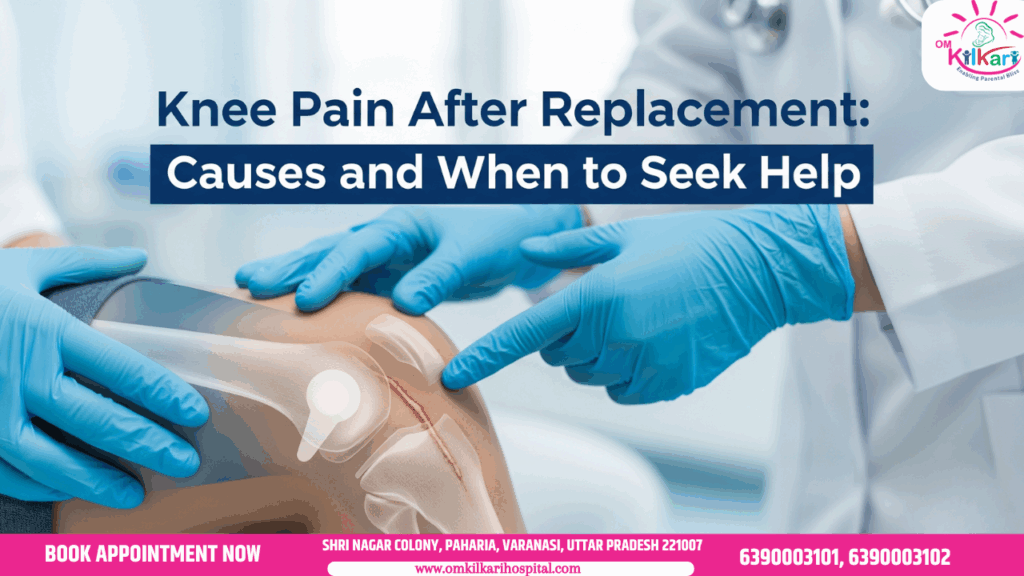
While mild discomfort is part of the healing process, persistent or severe pain after a knee replacement should never be ignored. It could be a sign of infection, implant issues, or other treatable conditions.
Our orthopedic experts are here to help you understand why knee pain may occur after replacement, how we diagnose it, and the advanced treatment options we offer in Varanasi for faster, safer recovery.
2. What is Knee Replacement Surgery?
Purpose & Benefits
Knee replacement (knee arthroplasty) is a surgical procedure where damaged joint surfaces are replaced with artificial components. It’s performed to:
- Relieve chronic pain from arthritis or injury
- Improve knee function
- Enhance quality of life
At OM Kilkari Hospital, our orthopedic surgeons use minimally invasive techniques, precision alignment systems, and infection control protocols to ensure the best outcomes.
Types of Knee Replacement
- Total Knee Replacement (TKR) – Both joint surfaces are replaced.
- Partial Knee Replacement (PKR) – Only the damaged part of the knee is replaced.
- Revision Knee Replacement – A second surgery to replace a failed implant.
3. Recovery Timeline – What’s Normal & What’s Not
After surgery at OM Kilkari Hospital, we provide personalized rehabilitation programs to speed up healing. Here’s a general recovery outline:
- Week 1–3: Mild to moderate pain, swelling, and stiffness—managed with medication and physiotherapy.
- 1–3 Months: Significant pain reduction; walking without major discomfort.
- 3–6 Months: Return to normal activities.
- 6–12 Months: Complete healing for most patients.
If pain persists beyond this period or worsens, further evaluation is essential.
4. Common Causes of Knee Pain After Replacement
1. Normal Post-Surgical Healing
- Temporary inflammation and tissue healing cause mild pain.
- Managed with prescribed medications and ice therapy.
2. Infection
- Signs: Redness, warmth, fever, pus discharge.
- At OM Kilkari Hospital, we use sterile surgical techniques and post-op monitoring to minimize risk.
3. Implant Loosening
- Can occur years after surgery or prematurely if bone healing is inadequate.
- Symptoms: Pain during movement, instability.
4. Stiffness (Arthrofibrosis)
- Excess scar tissue limits flexibility.
- Treated with aggressive physiotherapy and in severe cases, minimally invasive scar tissue removal.
5. Nerve-Related Pain
- Burning, tingling, or numbness due to nerve irritation.
- Our pain management specialists design targeted therapies for nerve recovery.
6. Referred Pain
- Sometimes pain originates from the hip or spine rather than the knee.
5. When to Seek Immediate Medical Attention
You should contact OM Kilkari Hospital right away if you experience:
- Sudden severe pain
- High fever
- Persistent swelling or redness
- Pus discharge from the incision
- Inability to bear weight
6. How OM Kilkari Hospital Diagnoses Post-Replacement Knee Pain
Our orthopedic evaluation includes:
- Detailed History & Physical Exam
- X-rays for implant positioning
- MRI or CT scans for soft tissue assessment
- Blood Tests to detect infection
- Joint Aspiration if infection is suspected
7. Advanced Treatment Options Available at OM Kilkari Hospital
We offer:
- Targeted Medication Plans
- Physiotherapy with Modern Equipment
- Ultrasound-Guided Injections
- Minimally Invasive Revision Surgeries
- Comprehensive Pain Management Programs
8. Preventing Knee Pain After Surgery – Our Expert Tips
- Maintain a healthy weight
- Avoid high-impact activities early on
- Follow your physiotherapy schedule diligently
- Keep follow-up appointments with your orthopedic surgeon
9. Patient Success Stories from OM Kilkari Hospital
We have helped hundreds of patients in Varanasi and surrounding regions regain mobility after knee replacement. For example:
Mrs. Sharma, 62, came to us with severe post-replacement pain from another hospital. After proper diagnosis, we treated a hidden infection, and within 3 months, she resumed her daily walks pain-free.
10. Frequently Asked Questions (FAQs)
Q1: Is knee pain normal a year after replacement?
A: Occasional mild discomfort can happen, but persistent pain needs evaluation.
Q2: Can my implant wear out?
A: Yes, most last 15–20 years; revision may be needed if worn.
Q3: How can OM Kilkari Hospital help with failed knee replacements?
A: We specialize in complex revision surgeries with high success rates.
11. Conclusion & Call-to-Action
Knee pain after replacement is not always a cause for alarm—but it should never be ignored. At OM Kilkari Hospital, we combine advanced technology, skilled surgeons, and compassionate care to ensure your new knee supports a pain-free, active life.