

Author name: omkilkarihospital

Uncategorized

Yoga for Back Pain – A Physiotherapist’s Guide to Relief

Back pain is a widespread issue affecting people of all ages, often caused by poor posture, prolonged sitting, muscle strain, or spinal conditions. While medications and physiotherapy provide relief, yoga offers a natural, long-term solution by improving flexibility, strengthening core muscles, and correcting posture. At Om Kilkari Hospital, our physiotherapy experts recommend specific yoga poses to alleviate back pain and enhance spinal health. This guide includes step-by-step instructions, benefits, precautions, and expert advice to help you practice safely. Why Yoga is Effective for Back Pain? Yoga combines gentle stretching, strengthening, and mindful breathing, making it ideal for back pain relief. Research shows that regular yoga practice can:✅ Reduce chronic lower back pain✅ Improve spinal mobility✅ Strengthen core and back muscles✅ Correct posture imbalances✅ Decrease stress and muscle tension 5 Best Yoga Poses for Back Pain (Physiotherapist-Approved) 1. Cat-Cow Stretch (Marjaryasana-Bitilasana) How to Do It: Benefits: 2. Child’s Pose (Balasana) How to Do It: Benefits: 3. Cobra Pose (Bhujangasana) How to Do It: Benefits: 4. Downward-Facing Dog (Adho Mukha Svanasana) How to Do It: Benefits: 5. Bridge Pose (Setu Bandhasana) How to Do It: Benefits: Precautions & Tips for Safe Practice ✔ Warm up first – Light stretches or a short walk prepare muscles.✔ Avoid overstretching – Move gently; pain should not increase.✔ Modify poses if needed – Use props (blocks, straps) for support.✔ Breathe deeply – Avoid holding your breath.✔ Stop if pain worsens – Consult a physiotherapist if discomfort persists. Frequently Asked Questions (FAQs) 1. Can yoga cure chronic back pain? Yoga helps manage and reduce chronic back pain by improving flexibility and strength. However, severe conditions (like herniated discs) may require medical intervention. 2. How often should I do yoga for back pain? For best results, practice 3-5 times per week, holding each pose for 20-30 seconds. 3. Which yoga poses should I avoid if I have back pain? Avoid deep forward bends, full wheel pose, and intense twists if you have acute pain or disc issues. 4. Can beginners do these poses? Yes! Start with gentle modifications and gradually increase duration. 5. When should I see a physiotherapist? If pain is severe, persistent, or accompanied by numbness/weakness, consult a specialist at Om Kilkari Hospital for a personalized treatment plan. Professional Help at Om Kilkari Hospital If back pain interferes with daily life, our physiotherapy team provides:🔹 Personalized yoga therapy🔹 Spinal mobilization techniques🔹 Posture correction exercises🔹 Pain management strategies Book an appointment today at Om Kilkari Hospital for expert care!
Uncategorized

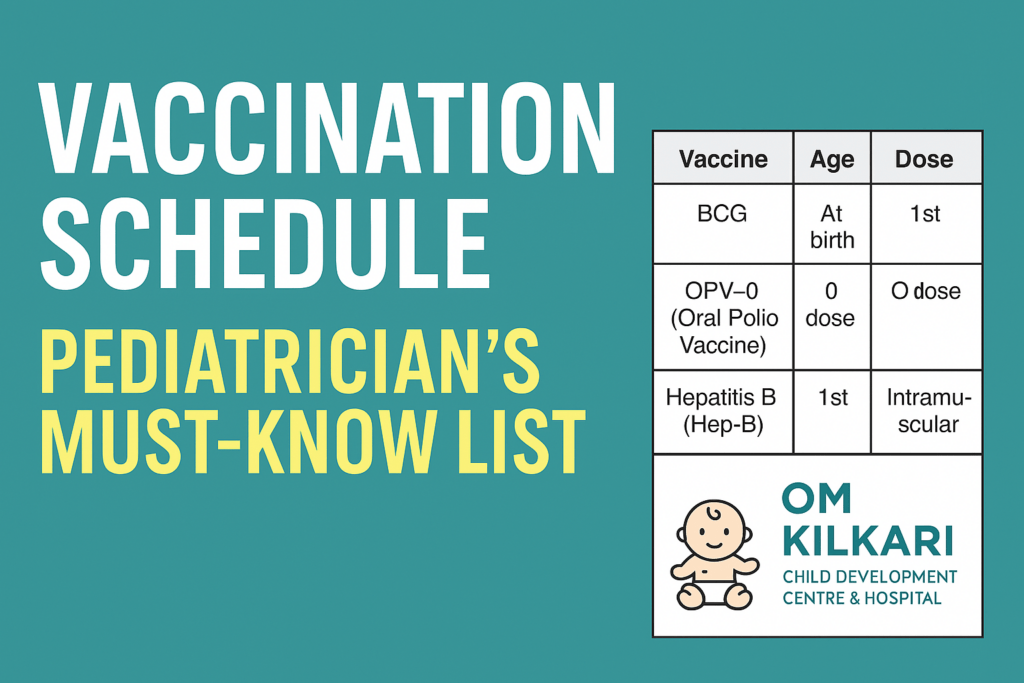
Vaccination Schedule – A Pediatrician’s Must-Know List | Om Kilkari Child Development Centre & Hospital

Introduction At Om Kilkari Child Development Centre & Hospital, we understand that vaccination is the first shield of protection every child deserves. As a leading pediatric and child health center, we ensure every newborn, infant, and adolescent receives timely immunizations as per national guidelines. This article offers a complete pediatric vaccination schedule, designed for doctors, new parents, and caregivers to keep children healthy, strong, and safe from preventable diseases. 🌟 Why Choose Vaccination at Om Kilkari Hospital? 📅 Indian Vaccination Schedule for Children – As Followed by Om Kilkari Hospital 🍼 At Birth Vaccine Disease Prevented Route BCG Tuberculosis Intradermal OPV-0 (Oral Polio Vaccine) Polio Oral Hepatitis B – Birth Dose Hepatitis B Intramuscular 🗓️ 6 Weeks Vaccine Type Route Pentavalent (DPT + Hep-B + Hib) 1st Dose Intramuscular IPV (Inactivated Polio) 1st Dose Intramuscular Rotavirus 1st Dose Oral PCV (Pneumococcal) 1st Dose Intramuscular 🗓️ 10 Weeks Vaccine Type Route Pentavalent 2nd Dose Intramuscular IPV 2nd Dose Intramuscular Rotavirus 2nd Dose Oral 🗓️ 14 Weeks Vaccine Type Route Pentavalent 3rd Dose Intramuscular IPV 3rd Dose Intramuscular Rotavirus 3rd Dose Oral PCV 2nd Dose Intramuscular 🗓️ 6 Months Vaccine Type Route Hepatitis B 3rd Dose Intramuscular 🗓️ 9 Months Vaccine Type Route MR (Measles-Rubella) 1st Dose Subcutaneous JE (in endemic areas) 1st Dose Subcutaneous 🗓️ 12-15 Months Vaccine Type Route PCV Booster Booster Intramuscular Hib Booster Booster Intramuscular MMR 1st Dose Subcutaneous Varicella 1st Dose Subcutaneous 🗓️ 16-18 Months Vaccine Type Route DPT Booster Booster Intramuscular IPV Booster Booster Intramuscular 🗓️ 2 Years Vaccine Type Route Typhoid Conjugate Vaccine (TCV) Single Dose Intramuscular 🗓️ 4-6 Years Vaccine Type Route DPT Booster-2 Booster Intramuscular MMR 2nd Dose Subcutaneous Varicella 2nd Dose Subcutaneous 🧒 Adolescents (10-16 Years) Vaccine Type Route Tdap Booster Intramuscular HPV (for girls) 2 Doses Intramuscular JE Booster (endemic zones) Booster Subcutaneous ✅ Optional Vaccines Offered at Om Kilkari Hospital Vaccine Recommended Age Benefits Influenza (Flu shot) 6 months+ Prevents seasonal flu Hepatitis A 12 months+ Liver protection Meningococcal 2 years+ Prevents meningitis 🩺 Pediatrician Tips from Om Kilkari Experts 📢 Vaccination FAQs Q: What if my child misses a vaccine?A: At Om Kilkari Hospital, our pediatricians provide catch-up plans so your child can safely resume protection. Q: Are vaccines safe?A: Absolutely. All vaccines at Om Kilkari Hospital are WHO-approved, stored under strict cold-chain protocols. Q: Can vaccines be combined?A: Yes. Combination vaccines like Pentavalent are safe, effective, and reduce the number of injections.

Gynaecology

Summer Skin Care Tips: Your Ultimate Sun Protection Guide by Kilkari Hospital

As temperatures rise and the sun blazes stronger, it’s crucial to give your skin the love and protection it deserves. Summer can be harsh on your skin, leading to issues like sunburn, premature aging, pigmentation, and even long-term damage. But with the right skincare routine and sun protection habits, you can keep your skin glowing and healthy all summer long. Here’s your complete sun protection guide—a collection of expert-recommended summer skincare tips to protect and nourish your skin during the hottest months of the year. 🌞 1. Never Skip Sunscreen Sunscreen is your skin’s best friend in summer. Choose a broad-spectrum sunscreen that protects against both UVA and UVB rays. Go for at least SPF 30 or higher, and reapply every 2 hours, especially if you’re swimming or sweating. Pro Tip: Look for sunscreens with ingredients like zinc oxide, titanium dioxide, or avobenzone for maximum protection. 🧴 2. Moisturize Wisely Summer heat can dehydrate your skin even if it feels oily. Use a lightweight, oil-free moisturizer that keeps your skin hydrated without clogging your pores. Products with ingredients like hyaluronic acid or aloe vera are ideal. 💧 3. Stay Hydrated from the Inside Out Your skin reflects what’s going on inside your body. Drink plenty of water—at least 8–10 glasses a day. Add coconut water, lemon water, and fresh fruits like watermelon and cucumber to your diet to keep your skin supple and fresh. 🧢 4. Cover Up Smartly Avoid direct sun exposure between 10 AM and 4 PM, when UV rays are strongest. When stepping outside: This physical protection is just as important as using sunscreen. 🌿 5. Cleanse Gently, but Regularly Sweat, oil, and dust can clog your pores during summer. Use a gentle, non-comedogenic cleanser twice a day to keep your skin clean and avoid breakouts. 🍓 6. Exfoliate (But Don’t Overdo It) Exfoliating 1–2 times a week helps remove dead skin cells and allows better absorption of skincare products. Opt for mild scrubs or chemical exfoliants like AHAs and BHAs, but be cautious not to over-exfoliate, as it can lead to sensitivity and redness under the sun. ❌ 7. Ditch Heavy Makeup Heavy makeup can mix with sweat and clog your pores. Switch to lightweight, mineral-based makeup, or try a tinted moisturizer with SPF. Let your skin breathe! 🥗 8. Eat for Glowing Skin Your diet plays a huge role in skin health. Focus on: These help fight free radicals and boost your skin’s natural defense. 🧊 9. Soothe with Cooling Ingredients Sunburn or redness? Soothe your skin with natural coolants like: These reduce inflammation and hydrate your skin. 💤 10. Don’t Skip Night Care Nighttime is when your skin repairs itself. After cleansing, apply a hydrating serum, followed by a light moisturizer. Use products with niacinamide, peptides, or retinol (if recommended by your dermatologist) to nourish and restore your skin overnight. ⚠️ Bonus: Don’t Forget These Spots! People often forget to protect: These areas are just as vulnerable to sun damage. Final Thoughts Taking care of your skin in summer doesn’t need to be complicated. With these summer skincare tips, you can protect your skin from the harsh sun, prevent damage, and maintain a radiant glow throughout the season. Remember: prevention is better than cure. Make sun protection a non-negotiable part of your daily skincare routine, and your skin will thank you for years to come. Stay sun-safe and glow on! If you’d like this article tailored for your hospital, blog, or brand (e.g., with a call-to-action for dermatology consultations), just let me know—I can customize it for you! 4o You said: for for omkilkaril hospital ChatGPT said: Got it! Here’s the same article customized for Kilkari Women and Children’s Hospital and Fertility Centre, with a friendly, informative tone and a light promotional touch to encourage trust and engagement. Summer Skin Care Tips: Your Ultimate Sun Protection Guide by Kilkari Hospital As the summer sun turns up the heat, it’s time to show your skin some extra love! At Kilkari Women and Children’s Hospital and Fertility Centre, we care for you and your family’s well-being—not just within our walls, but every day, in every season. That includes helping you protect your skin from the intense summer sun. Excessive sun exposure can lead to sunburn, premature aging, and long-term skin damage. But with the right skincare habits, you can keep your skin safe, glowing, and healthy. Here’s our expert-backed guide to summer skin care and sun protection. 🌞 1. Sunscreen is a Must, Not a Maybe Whether you’re stepping out for five minutes or five hours, always apply sunscreen. Choose a broad-spectrum SPF 30 or higher, and reapply every 2 hours, especially if you’re sweating or swimming. ✅ Kilkari Tip: Look for gentle, skin-safe sunscreens—especially for children and pregnant women. Our dermatologists can help you choose the best one for your skin type. 🧴 2. Use a Light Moisturizer Summer heat can dry out your skin even if it feels oily. Switch to a light, non-greasy moisturizer to maintain hydration without clogging pores. ✅ Opt for ingredients like aloe vera, glycerin, or hyaluronic acid. 💧 3. Hydrate from Within Healthy skin starts with proper hydration. Drink at least 8–10 glasses of water daily. Add hydrating fruits like watermelon, oranges, and cucumber to your diet for extra nourishment. 🧢 4. Shield Your Skin from the Sun Avoid direct sun between 10 AM to 4 PM. If you’re outdoors: 🌿 5. Keep Your Skin Clean With all the sweat and pollution, cleansing becomes essential. Wash your face twice daily with a mild, pH-balanced cleanser to prevent breakouts and dullness. 🍓 6. Exfoliate Gently Exfoliating once or twice a week removes dead skin and helps your skincare products work better. Use a gentle scrub or natural exfoliants like oats or coffee—but don’t overdo it! ❌ 7. Go Easy on the Makeup Heavy makeup can trap sweat and lead to clogged pores. Try using tinted moisturizers with SPF or go makeup-free when possible. 🥗 8. Eat for Healthy, Radiant

Gynaecology

Breaking the Silence: Understanding Infertility and the Journey to Parenthood

A Special Feature by Kilkari Women and Children’s Hospital – National Infertility Awareness Week Introduction: Shedding Light on a Silent Struggle Infertility is a deeply personal and often silent battle that affects millions of people worldwide. In India alone, it is estimated that around 27.5 million couples are struggling with infertility, yet conversations around it remain hushed. National Infertility Awareness Week (NIAW), observed every April, serves as a crucial opportunity to break the stigma, offer support, and raise awareness about fertility issues and treatment options. At Kilkari Women and Children’s Hospital, we believe in not just offering world-class infertility care but also supporting emotional well-being, empowering individuals and couples to make informed choices. In this special article, we explore the causes, treatment options, emotional impact, and the road to hope through the lens of our experts and real-life experiences. Understanding Infertility: Causes, Myths, and Medical Insight Infertility is defined as the inability to conceive after 12 months of regular, unprotected intercourse. It’s a common misconception that infertility is primarily a female issue. In reality, male infertility contributes to nearly 50% of cases. Here’s a breakdown of common causes: Causes in Women: Causes in Men: Shared and Unexplained Causes: Sometimes, both partners may contribute to fertility challenges. In about 10–20% of cases, the cause remains unexplained despite testing. Kilkari Hospital provides comprehensive diagnostics to pinpoint the exact causes of infertility, followed by tailored treatment strategies. Myths vs. Facts About Infertility Despite advances in medical science, numerous myths persist: Myth Fact Infertility is only a woman’s problem. Male factors are involved in nearly 50% of infertility cases. IVF is the only solution. There are multiple options including medication, IUI, and lifestyle changes. You just need to “relax” and it will happen. Infertility is a medical condition, not just a psychological issue. Adoption is the only alternative. Modern medicine offers many assisted reproduction options. Fertility Treatment Options at Kilkari Hospital Kilkari Hospital is proud to offer a comprehensive fertility care program, including diagnosis, counseling, and advanced reproductive technologies. Here are the primary services: 1. Fertility Assessment & Counseling Initial testing includes hormone level tests, semen analysis, ultrasound scans, and genetic screening. Psychological counseling is also a vital part of this process. 2. Ovulation Induction & Timed Intercourse For women with irregular ovulation, medications are prescribed to stimulate egg release, followed by timed intercourse. 3. Intrauterine Insemination (IUI) Sperm is washed and concentrated, then introduced directly into the uterus during ovulation. It’s a less invasive and affordable option. 4. In Vitro Fertilization (IVF) Eggs are retrieved and fertilized with sperm in a lab, then the embryo is transferred to the uterus. IVF has helped millions worldwide achieve parenthood. 5. Intracytoplasmic Sperm Injection (ICSI) Used in cases of severe male infertility, ICSI involves injecting a single sperm directly into an egg. 6. Donor Programs & Surrogacy For couples who cannot conceive with their own gametes, Kilkari offers ethical donor and gestational surrogacy options. Emotional Wellness: The Heart of Fertility Care Infertility can lead to emotional turmoil, relationship strain, and feelings of inadequacy. At Kilkari, we offer: “Infertility is not just a physical journey — it’s emotional and spiritual. Our goal is to walk with our patients every step of the way,” says Dr. [Doctor’s Name], Senior IVF Specialist at Kilkari. Real Stories, Real Hope: Testimonials from Kilkari Families “After 5 years of trying, Kilkari brought our dream to life. The doctors treated us like family and gave us hope when we had none. Today, we hold our miracle in our arms.”— Priya & Ramesh, Varanasi “We were scared, confused, and ashamed. But the team at Kilkari changed our lives — not just with treatment, but with compassion.”— Meena & Ashok, Mirzapur Stories like these remind us that infertility is not the end — it’s a bend in the road toward a different path to parenthood. Why Choose Kilkari Hospital for Fertility Care? Whether you’re at the start of your journey or have tried treatments elsewhere, Kilkari offers a new beginning with personalized care and advanced technology. How to Support National Infertility Awareness Week Raising awareness is the first step toward change. Here’s how you can help: At Kilkari, we are hosting free fertility consultations and awareness sessions throughout the week. Follow us on Facebook and Instagram for live events, doctor Q&As, and more. Final Thoughts: Hope, Healing, and a Future Full of Possibility Infertility can feel isolating — but no one should walk this path alone. With the right guidance, technology, and emotional support, parenthood is still possible. National Infertility Awareness Week is not just a campaign; it’s a call to empathy, education, and empowerment. At Kilkari Women and Children’s Hospital, we are proud to be part of your story — offering science-backed solutions and heart-led care for every couple dreaming of a child.

Uncategorized

Affording IVF: Grants and Insurance Tips to Make Parenthood Possible

In vitro fertilization (IVF) is a life-changing opportunity for couples and individuals dreaming of starting or growing a family. But with the average IVF cycle costing anywhere from ₹1.2 lakh to ₹2.5 lakh (or more, depending on location and clinic), the price can feel overwhelming. The good news? There are several grants, financial aid programs, and insurance tips that can help ease the burden and bring your dream closer to reality. 1. Understanding IVF Costs Before diving into financial help, it’s important to understand what you’re paying for. A single IVF cycle can include: Knowing the breakdown can help you ask the right questions and plan ahead. 2. IVF Grants & Financial Assistance Programs While IVF grants are more common in countries like the U.S., similar support is emerging in India and other regions. Here’s how you can explore available options: 🟡 Hospital-Based Support Many fertility clinics and hospitals offer in-house financial assistance, EMI plans, or discounted packages for: Tip: Always ask the fertility center if they have any running promotions, tie-ups with NGOs, or compassionate care programs. 🟢 Nonprofit Organizations and NGOs Some Indian NGOs and charitable trusts may offer partial funding or connect you with helpful resources. For example: Reach out to local organizations, especially those working in women’s health or family welfare. 3. Check Your Insurance Coverage (Yes, It’s Possible!) While many insurance plans exclude IVF under standard health coverage, things are changing: ✅ Maternity & Infertility Add-ons Some insurers now offer infertility add-on covers or comprehensive maternity plans that partially reimburse IVF costs. ✅ Corporate Health Plans If you’re employed by a large company, check your corporate health insurance policy. Some MNCs and progressive Indian companies now include fertility treatments under extended wellness benefits. ✅ Government Schemes In some states, public hospitals or schemes like Ayushman Bharat may offer fertility consultations and basic treatments at subsidized rates. 4. Tips to Save on IVF Without Compromising Care 5. Emotional & Financial Planning Go Hand-in-Hand It’s okay to ask for help. IVF is not just a medical journey—it’s emotional, mental, and financial. Planning ahead, researching all options, and having open conversations with your healthcare team can lighten the load. Final Thoughts IVF doesn’t have to feel financially out of reach. With the right mix of grants, insurance insights, and planning, you can move forward confidently toward building your family. At Kilkari Women and Children’s Hospital, we’re here to support you every step of the way—from affordable care to personalized financial guidance. Let’s make your parenthood journey possible, together. 💕

IVF Success Rates by Age: What to Expect in Your 20s, 30s, and 40s
Uncategorized

IVF Success Rates by Age: What to Expect in Your 20s, 30s, and 40s

At Omkilkari Hospital, we understand that the journey to parenthood can be challenging, especially when considering In Vitro Fertilization (IVF). One of the most critical factors influencing IVF success is age. Whether you’re in your 20s, 30s, or 40s, understanding how age impacts IVF success rates can help set realistic expectations and guide your fertility journey. In this blog, we’ll explore IVF success rates by age group and provide insights to help you make informed decisions. Why Does Age Affect IVF Success? A woman’s egg quality and quantity decline with age, directly impacting fertility. Younger women typically have healthier eggs, leading to higher IVF success rates. As age increases, the chances of conception decrease, and the risk of miscarriage and chromosomal abnormalities rises. Let’s break down IVF success rates by age: 1. IVF Success Rates in Your 20s Women in their 20s have the highest IVF success rates due to optimal egg quality and quantity. Key Statistics: Why Consider IVF in Your 20s? 2. IVF Success Rates in Your 30s Fertility starts to decline gradually after 30, with a more noticeable drop after 35. Key Statistics: Challenges in Your 30s: Tips for IVF in Your 30s: 3. IVF Success Rates in Your 40s After 40, fertility declines significantly, but IVF can still be successful with the right approach. Key Statistics: Challenges in Your 40s: Options for IVF in Your 40s: How Can Omkilkari Hospital Help? At Omkilkari Hospital, our expert fertility specialists provide personalized IVF treatment plans based on your age, medical history, and fertility goals. We offer:✅ Advanced IVF techniques (ICSI, PGT, blastocyst culture)✅ Egg freezing & fertility preservation✅ Donor egg/sperm programs✅ High success rates with compassionate care Final Thoughts While age is a major factor in IVF success, advancements in reproductive medicine provide hope at every stage. Whether you’re in your 20s, 30s, or 40s, early consultation with a fertility specialist can improve your chances of a successful pregnancy. 📞 Contact Omkilkari Hospital today to schedule a consultation and take the first step toward your parenthood journey!

Gynaecology

IVF Treatment in Varanasi: Your Journey to Parenthood Starts Here

Introduction:Infertility can be a challenging journey, but advancements in medical science have opened doors to new possibilities. If you are exploring IVF treatment options, finding a reputable IVF clinic near you in Varanasi is crucial for successful outcomes. Kilkari Women and Children’s Hospital offers comprehensive fertility care with advanced technology and personalized support. Our Specialists: What is IVF Treatment?In Vitro Fertilization (IVF) is an assisted reproductive technology that helps couples conceive by combining an egg and sperm outside the body in a specialized lab. The resulting embryo is then transferred to the uterus for implantation. Why Choose Kilkari Women and Children’s Hospital for IVF Treatment in Varanasi? IVF Treatment Process Choosing the Right IVF Hospital in VaranasiWhen searching for an IVF hospital in Varanasi, prioritize facilities with experienced specialists, high success rates, and comprehensive care. Kilkari Women and Children’s Hospital excels in all these aspects, ensuring you receive world-class treatment close to home. ConclusionIf you’re seeking IVF treatment at a trusted IVF clinic near you in Varanasi, Kilkari Women and Children’s Hospital is dedicated to helping you achieve your dream of parenthood. Contact us today to learn more about your fertility options and take the first step towards a brighter future.

Scroll to Top
Call Now