
Kidney Cancer: Symptoms, Causes, Diagnosis and Treatment
Kidney cancer is a serious condition that affects thousands of people worldwide. Early detection and treatment can significantly improve outcomes. In this blog, we’ll explore the symptoms, causes, diagnosis, and treatment options for kidney cancer while optimizing for SEO to ensure you get the most reliable information.
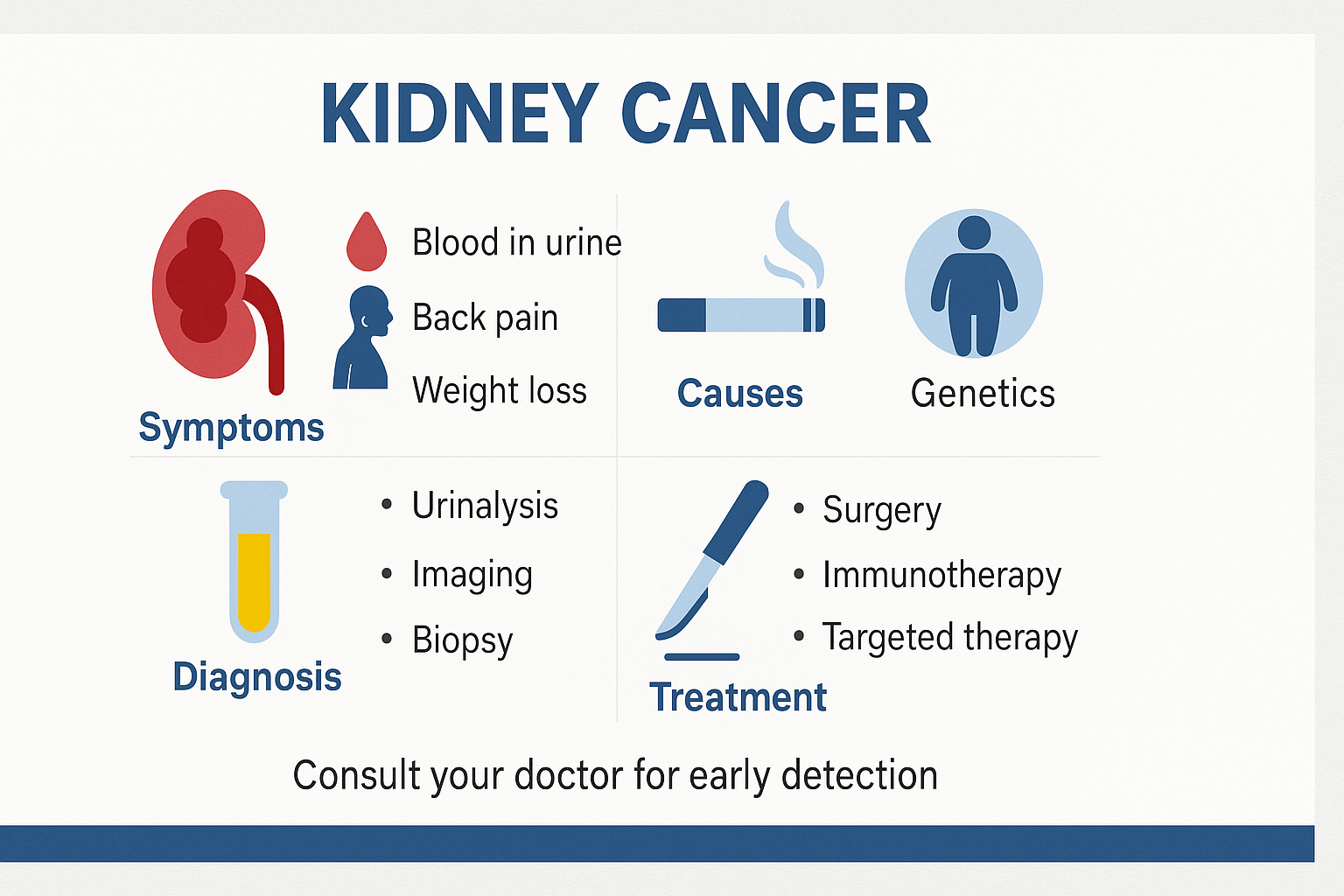
What is Kidney Cancer?
Kidney cancer, also known as renal cancer, occurs when abnormal cells grow uncontrollably in the kidneys. The most common type is renal cell carcinoma (RCC), accounting for about 90% of cases.
Symptoms of Kidney Cancer
Early-stage kidney cancer often shows no symptoms, but as it progresses, the following signs may appear:
| Symptom | Description |
|---|---|
| Blood in urine (hematuria) | Pink, red, or cola-colored urine |
| Persistent back or side pain | Pain below the ribs that doesn’t go away |
| Unexplained weight loss | Sudden weight loss without diet or exercise changes |
| Fatigue | Extreme tiredness that doesn’t improve with rest |
| Fever | Recurrent fevers not caused by infection |
| Swelling in legs/ankles | Fluid buildup due to kidney dysfunction |
Causes and Risk Factors of Kidney Cancer
The exact cause is unknown, but several risk factors increase the likelihood of developing kidney cancer:
✅ Smoking – Doubles the risk of kidney cancer
✅ Obesity – High BMI increases hormonal changes that may trigger cancer
✅ High blood pressure (Hypertension) – Linked to kidney damage
✅ Family history – Genetic predisposition (e.g., von Hippel-Lindau disease)
✅ Exposure to toxins – Asbestos, cadmium, and certain chemicals
✅ Chronic kidney disease – Long-term dialysis patients are at higher risk
Diagnosis of Kidney Cancer
If kidney cancer is suspected, doctors may recommend the following tests:
| Diagnostic Test | Purpose |
|---|---|
| Urinalysis | Checks for blood or abnormal cells in urine |
| Blood tests | Evaluates kidney function and overall health |
| Imaging tests (CT, MRI, Ultrasound) | Detects tumors and checks their size/spread |
| Biopsy | Removes a small tissue sample for lab testing |
| IV Pyelogram | X-ray with contrast dye to examine kidneys |
Treatment Options for Kidney Cancer
Treatment depends on the stage, size, and spread of the cancer. Common options include:
| Treatment | Description |
|---|---|
| Surgery (Nephrectomy) | Partial or complete kidney removal |
| Radiation Therapy | Uses high-energy rays to kill cancer cells |
| Immunotherapy | Boosts the immune system to fight cancer |
| Targeted Therapy | Drugs that attack specific cancer cell mutations |
| Cryoablation | Freezes cancer cells with extreme cold |
| Active Surveillance | Monitoring small, slow-growing tumors |
Prevention Tips
✔ Quit smoking – Reduces cancer risk significantly
✔ Maintain a healthy weight – Lowers obesity-related risks
✔ Control blood pressure – Prevents kidney damage
✔ Stay hydrated – Helps flush out toxins
✔ Limit exposure to harmful chemicals – Wear protective gear if needed
Conclusion
Kidney cancer can be life-threatening if not detected early. Knowing the symptoms, causes, and treatment options can help in timely intervention. If you experience any warning signs, consult a doctor immediately.