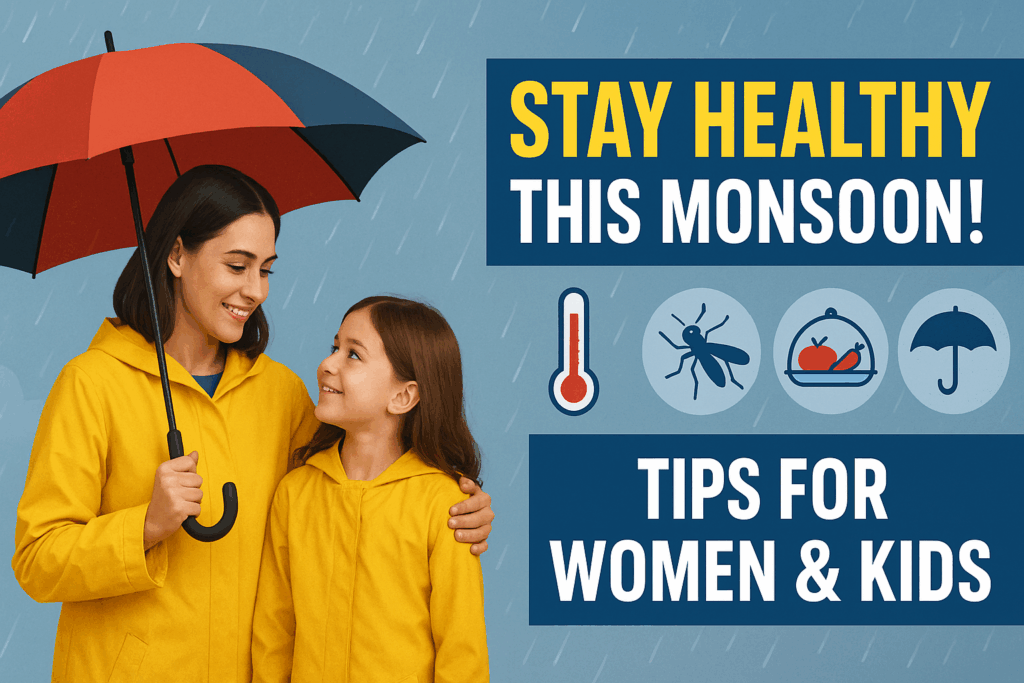
The monsoon season brings relief from the scorching summer heat, but it also invites a range of health concerns, especially for women and children. With increased humidity, stagnant water, and fluctuating temperatures, this season can lead to a spike in infections, allergies, and waterborne diseases. To ensure you and your family stay healthy and safe, following preventive measures and maintaining good hygiene is crucial.
Why Are Women and Children More Vulnerable During Monsoons?
Due to their relatively weaker immune systems, women and children, particularly infants and toddlers, are more susceptible to seasonal infections. Pregnant women and lactating mothers also need to be cautious, as infections can affect both their health and that of their baby. Children are more exposed to infections through school environments and outdoor play, while women often manage household tasks that increase exposure to bacteria and viruses.
Common Monsoon-Related Illnesses
- Cold and Flu – Sudden weather changes can lead to respiratory issues.
- Dengue and Malaria – Stagnant water is a breeding ground for mosquitoes.
- Typhoid and Cholera – Caused by contaminated food and water.
- Diarrhea and Gastroenteritis – Due to poor sanitation and unhygienic eating habits.
- Skin Infections – Increased humidity can cause fungal infections.
Essential Monsoon Health Tips for Women and Children
1. Boost Immunity Naturally
- Include immunity-boosting foods like citrus fruits (oranges, lemons), garlic, ginger, turmeric, and green leafy vegetables.
- Drink warm soups and herbal teas (like tulsi, ginger, and cinnamon).
- Breastfeeding mothers should eat a nutrient-rich diet to boost both their and their baby’s immunity.
2. Ensure Safe Drinking Water
- Always boil or filter drinking water.
- Avoid drinking water from public taps or unknown sources.
- Carry your own water bottle when stepping out.
3. Maintain Personal Hygiene
- Encourage frequent handwashing with soap, especially before eating and after using the toilet.
- Use antibacterial hand sanitizers when soap isn’t available.
- Bathe children daily, preferably with antiseptic soap during humid days.
4. Prevent Mosquito Breeding
- Keep the surroundings clean and dry; empty flowerpots, coolers, and containers holding stagnant water.
- Use mosquito repellents, nets, and wear full-sleeved clothing.
- Install screens on windows to prevent mosquito entry indoors.
5. Eat Fresh and Hygienic Food
- Avoid street food and uncovered items exposed to flies and dust.
- Cook food thoroughly, especially meat, fish, and eggs.
- Store leftovers properly in clean, covered containers in the refrigerator.
6. Protect Against Fungal Infections
- Keep skin dry and change wet clothes immediately.
- Use antifungal powders in areas prone to sweating, like underarms and feet.
- Avoid sharing towels and personal items.
7. Dress Appropriately
- Dress children in light, breathable fabrics to avoid rashes and skin infections.
- For women, especially pregnant women, wear cotton clothes and change out of damp clothes quickly to avoid urinary or vaginal infections.
8. Keep Indoor Air Clean
- Ensure good ventilation in the house.
- Avoid damp, moldy places, and use natural air fresheners like camphor or neem.
- Regularly clean fans, air conditioners, and air filters.
9. Vaccination and Regular Checkups
- Stay updated with children’s vaccination schedules.
- Visit a pediatrician if symptoms like fever, rashes, or diarrhea persist.
- Women with existing health conditions should consult their gynecologist for monsoon-specific precautions.
Monsoon Safety Tips for School-Going Children
- Pack a waterproof raincoat and umbrella in their bag.
- Ensure they wear proper footwear to avoid slipping and fungal infections.
- Teach them not to play in puddles or stagnant water.
Monsoon Safety for Pregnant and Lactating Women
- Avoid crowded places to reduce the risk of catching infections.
- Consult your doctor before taking any medication for cold or flu.
- Maintain proper hydration with lukewarm water and fresh fruit juices.
- Pay attention to any signs of swelling or skin irritation and seek timely medical advice.
Home Remedies for Minor Monsoon Illnesses
- For cold and cough: A warm mix of tulsi, ginger, and honey works wonders.
- For indigestion: Fennel seeds and ajwain boiled in water can relieve bloating.
- For skin issues: Neem leaves boiled in bathwater help prevent rashes and fungal infections.
Note: While home remedies can provide relief, they should not replace professional medical advice when symptoms are serious or persistent.
Final Thoughts
With the right care and awareness, monsoon can be a joyful season rather than a health hazard. By maintaining hygiene, eating right, and taking preventive measures, women and children can safely enjoy the beauty of the rains without falling ill. Stay alert, stay dry, and stay healthy!